LED Eye Mask Dark Circles Relief Ad Template - Square
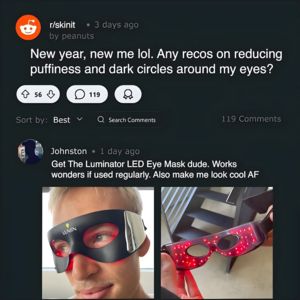
This square ad template mimics a Reddit thread to position an at-home LED eye mask as a real, peer-recommended fix for puffy eyes and dark circles. The design uses a dark, app-like background with hig...
Free for 7 days — Cancel anytime
About This Template
This square ad template mimics a Reddit thread to position an at-home LED eye mask as a real, peer-recommended fix for puffy eyes and dark circles. The design uses a dark, app-like background with high-contrast white typography, familiar upvote/comment UI icons, and a two-photo reply card that showcases the mask worn on-face and a close-up of the glowing red LEDs. That “community screenshot” look instantly signals authenticity and reduces skepticism—ideal for mid-funnel shoppers who are already solution-aware and comparing devices. Psychologically, it leans on curiosity (a relatable question), innovation (LED tech), and aspiration (looking “cool” while treating under-eyes). The template works because it turns features into social proof: the product is shown in-use and the benefit is implied through a credible recommendation format. Brands can customize by swapping the subreddit/header, updating the product name, adjusting engagement numbers, and replacing the two images with their own UGC-style shots while keeping the clean, dark UI aesthetic for maximum believability.