LED Face Mask 10-Min Results Ad Template - Square
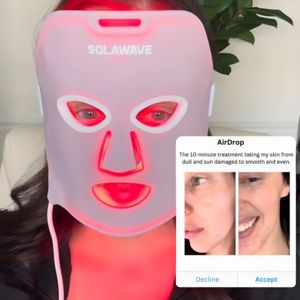
This square ad template is built to sell an at-home LED face mask/beauty device by showing the product in use and pairing it with a proof-style message. The main visual is a close-up model photo weari...
Free for 7 days — Cancel anytime
About This Template
This square ad template is built to sell an at-home LED face mask/beauty device by showing the product in use and pairing it with a proof-style message. The main visual is a close-up model photo wearing a glowing red-light mask, instantly communicating “treatment mode” and sparking curiosity. On the lower-right, a white iOS-style pop-up card mimics an AirDrop notification, featuring a short results claim and a two-image before/after skin comparison—an attention hook that feels like a real peer-to-peer share rather than a brand ad. The clean neutral background and minimal typography keep focus on the red illumination, while the high-contrast overlay creates a clear reading path. Psychologically, the template leans on transformation + self-care and light social proof, making it ideal for mid-funnel consideration among solution-aware shoppers who want evidence and ease (“10-minute treatment”). Brands can customize by swapping the device logo area, replacing the before/after images with their own results, and editing the claim to match approved benefits (tone, sun damage, texture) while keeping the playful notification concept intact.