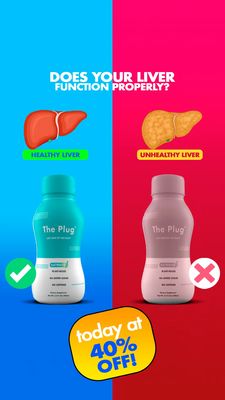
Liver Detox Drink Healthy vs Unhealthy Ad Template - Story
This 9:16 Story template is built for a bottled supplement or “wellness shot” positioned around liver support. The creative uses a bold split-screen comparison: a bright cyan left side labeled “Health...
Free for 7 days — Cancel anytime
About This Template
This 9:16 Story template is built for a bottled supplement or “wellness shot” positioned around liver support. The creative uses a bold split-screen comparison: a bright cyan left side labeled “Healthy liver” with a green check, versus a hot magenta/red right side labeled “Unhealthy liver” with a red X. At the top, a large all-caps question (“Does your liver function properly?”) grabs attention instantly and frames the problem before the product is even evaluated. Two matching bottle renders reinforce the contrast, while a tilted yellow badge at the bottom delivers a clear promo hook (“today at 40% off!”). This combination leverages fear-avoidance and curiosity (Am I at risk?) while offering a simple, immediate next step—ideal for TOF awareness and an “unaware” audience. Brands can easily swap the bottle mockup, adjust the liver illustrations to match claims, and recolor the background halves to fit brand palettes without losing the high-contrast, scannable structure that performs well in Stories and other vertical placements.