Menopause Supplement Curiosity Hook Ad Template - Story
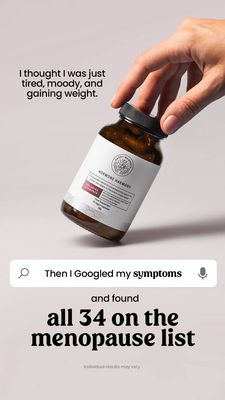
This 9:16 Story template is built for a menopause-support supplement, using a clean, editorial layout that feels like a real-life discovery moment. A hand holds an amber capsule bottle on a soft beige...
Free for 7 days — Cancel anytime
About This Template
This 9:16 Story template is built for a menopause-support supplement, using a clean, editorial layout that feels like a real-life discovery moment. A hand holds an amber capsule bottle on a soft beige background, creating instant product credibility while keeping the scene calm and clinical. The headline is left-aligned in simple sans-serif (“I thought I was just tired…”) to mirror a relatable inner monologue, then the design pivots into a “Google search” style bar—an attention-grabbing pattern interrupt that leverages curiosity and self-diagnosis behavior. The oversized serif statement (“all 34 on the menopause list”) delivers a strong problem-identification payoff, ideal for top-of-funnel audiences who feel off but haven’t connected symptoms to perimenopause/menopause. Minimal color accents on the label keep the focus on the claim and bottle. Brands can customize by swapping the symptom list, updating the bottle/label, adding a stronger CTA below the search bar, or localizing language for different age segments and wellness positioning (natural, clinical, premium).